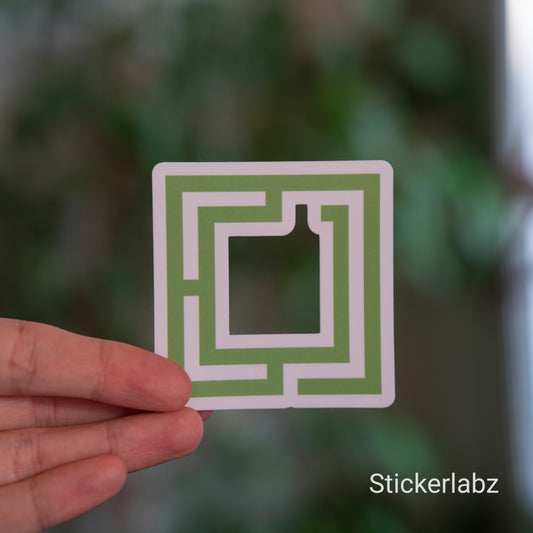
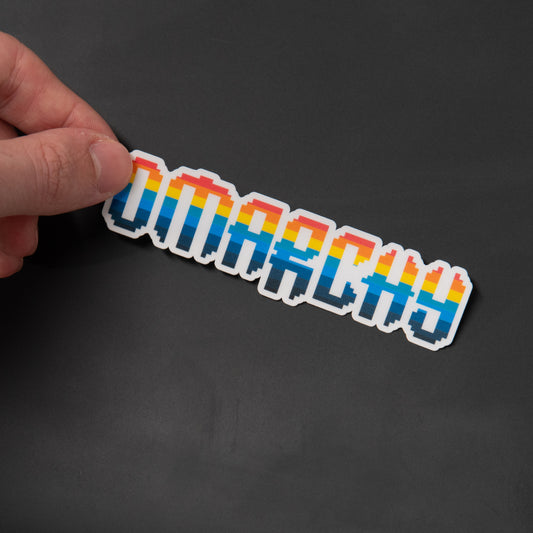
Printed and cut in France

Stickers made to your artwork.

Send a PNG or an SVG, pick a size, a finish and a quantity, and see your sticker at scale before you order. Printed, laminated and die-cut in our own workshop — no reseller in between.

  • Laminated — water and UV resistant
  • Made in our own workshop
  • A proof before we print

Ready-made designs

How it works

  1. You send your artwork

    A PNG with a transparent background, or an SVG, straight from the configurator.

  2. We send you a proof

    A preview at printed size, before anything is cut.

  3. We print once you approve

    Nothing goes on the press until you say yes.

  4. Printed, laminated, shipped

    Cut in our own workshop and laminated against water and UV.

What you actually get

Laminated, not just printed

Every sticker gets a laminate pass after printing. That layer is what makes it survive water, scratches and UV — outdoors, on a car window, in a dishwasher-adjacent life.

Printed and cut in our own workshop

No white-label reseller in between. We print, laminate and cut here, in France, in small batches, which is why lead times are short and quantities are honest.

Die-cut to the shape of your design

Send a PNG with a transparent background or an SVG and the cut follows the outline of your artwork, not a rectangle around it. Sizes run from 5 to 15 cm on the largest dimension.

A proof before anything is printed

You receive a proof by email and we wait for your approval. It is the step that catches a low-resolution file or a colour that will not print the way it looks on screen.

Sticker 101

The practical questions, answered once. The same answers on the homepage and on every product page, because the answers are the same.

Which file formats do you accept?

A PNG with a transparent background, or an SVG. 300 dpi minimum, 20 MB maximum. The transparent background is what lets the cut follow the shape of your design instead of a rectangle around it.

Which finish should I choose?

Matte is smooth and non-reflective: it absorbs light, stays discreet and photographs well. Glossy is brighter and more contrasted, with a mirror-like surface that catches the eye. Clear behaves like glossy on a transparent background: the white areas of your design let the surface underneath show through, so it disappears into a window or a laptop lid.

How durable are they? Are they waterproof?

Every sticker gets a protective laminate on top after printing. That layer is what makes it waterproof, scratch-resistant against everyday wear, and UV-resistant for six months to a year of direct outdoor sun before any visible fading.

How do I apply a sticker?

Clean the surface first — free of dust and grease; isopropyl alcohol where the surface allows it. Warming the surface slightly with a hairdryer helps the adhesive bond. Peel the sticker off its backing and lay it down from one edge to the other rather than dropping it flat, which is what traps air. Then rub firmly across the whole sticker.

What can I stick them on?

Any smooth, flat surface: laptops, gaming consoles and handhelds, water bottles and tumblers, cars, motorcycles and helmets, phone cases, windows and glass, skateboards. Textured, porous or uneven surfaces are the ones to avoid — the adhesive has nothing flat to grip.

Do I see my stickers before they are printed?

Always. You get a proof by email and nothing is printed until you approve it. The preview in the configurator is indicative: it shows size and outline, not final colour. The proof is what counts.

Which sizes can I order?

The size you pick is the largest dimension of your design, and the outline is added around it: a 5 cm design with a 3 mm outline is a 5.6 cm finished sticker. Larger formats, and volumes above the tiers in the configurator, go through a quote.

Will the colours match my screen?

Close, not identical. A screen emits light and paper reflects it, so very bright greens, oranges and blues print slightly softer. That is exactly why we send a proof before printing anything.

Where are they made?

In our own workshop, in France. Printed, laminated and cut here, in small batches — which is why the quantity tiers stop where the workshop stops, rather than promising volumes we cannot cut.